Trust wallet extension is a self-custody browser wallet for desktop Web3 access
Trust wallet extension is a desktop browser wallet for holding crypto, connecting to Web3 apps, viewing NFTs, swapping assets, and managing staking from a laptop or desktop. It belongs to the Trust Wallet ecosystem, so the core idea is self-custody: the user controls the wallet keys, approves transactions in the browser, and works across supported blockchain networks from one extension.
The extension is built for people who prefer desktop DeFi and NFT activity over a phone-only workflow. A browser wallet gives a clearer view of dApp screens, token approvals, transaction prompts, and NFT marketplaces. It also keeps the signing step close to the websites where most Web3 actions happen, which makes it useful for swaps, staking dashboards, game items, token claims, DAO pages, and cross-chain portfolio checks.
Desktop Web3 access through a browser wallet
A browser extension acts as the bridge between a website and a blockchain account. When a decentralized app asks to connect, the wallet presents the account, shows the requested network, and asks the user to approve or reject the connection. After that, the dApp sends transaction requests to the wallet, and the wallet shows the signature or on-chain transaction details before anything leaves the account.
Trust wallet extension fits this desktop pattern while keeping the familiar Trust Wallet emphasis on self-custody and multi-chain access. The user does not need to paste private keys into websites. The wallet holds the account locally, the dApp receives only the permissioned connection, and each transaction still requires wallet approval.
How the multi-chain setup handles tokens and NFTs
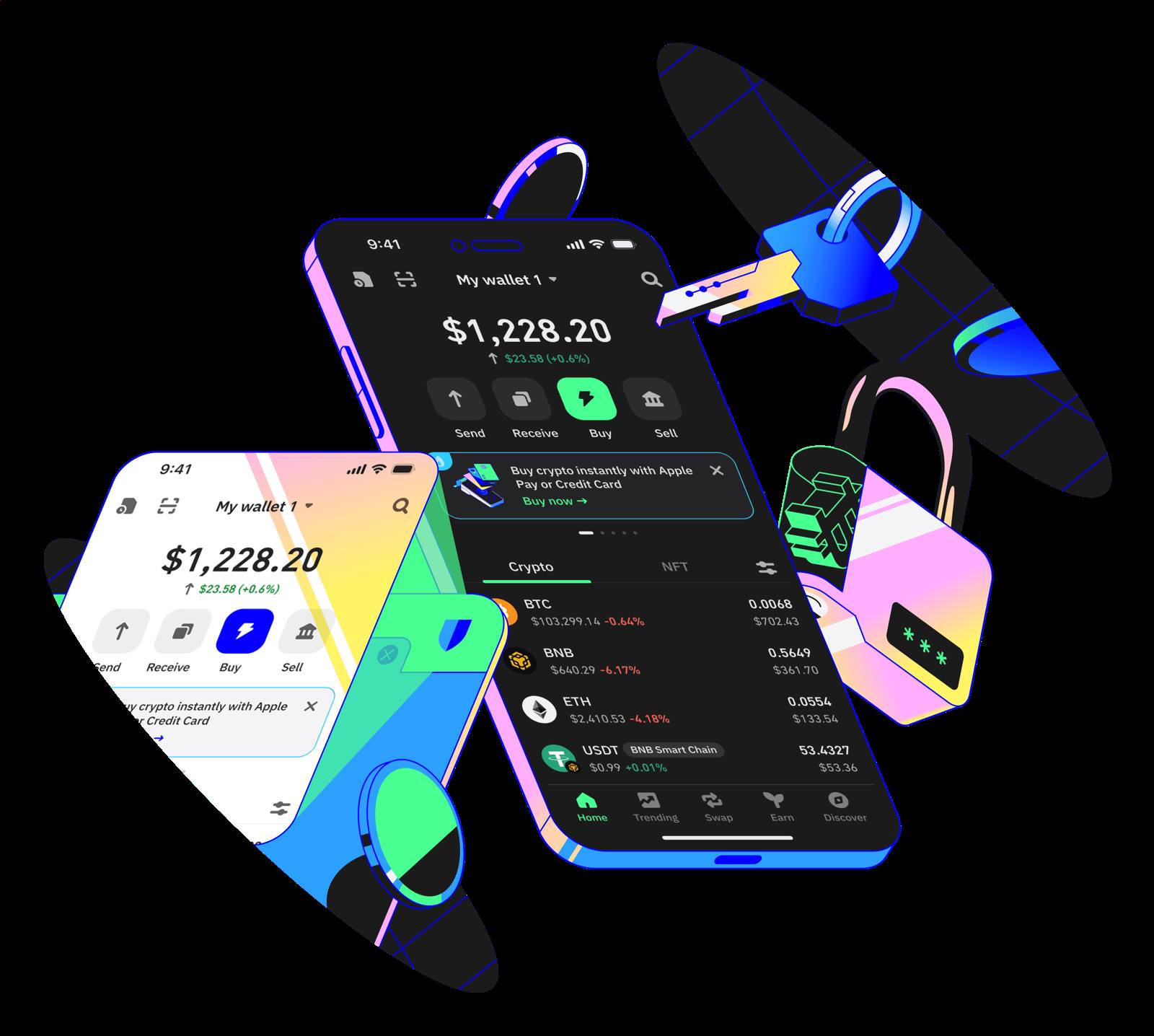
Multi-chain support matters because assets no longer live on one network. A user might hold ETH on Ethereum, BNB on BNB Smart Chain, POL on Polygon, SOL on Solana, stablecoins on several networks, and NFTs across marketplace ecosystems. The extension's job is to keep those accounts manageable from a desktop interface without forcing every action through a separate wallet.
For NFTs, the desktop format is especially practical. Larger screens make collections, traits, thumbnails, and marketplace pages easier to inspect. Trust wallet extension is useful when a user wants to view digital collectibles beside the dApp that minted, listed, or uses them. The important habit is to read the network and transaction prompt before signing, because an NFT listing, transfer, or approval carries different consequences from a simple wallet connection.
Swaps, staking, and dApp approvals in one flow
Swaps inside a wallet reduce the number of tabs and contracts a user needs to touch, but the transaction still settles on a blockchain. Network fees are paid in the chain's gas token, such as ETH on Ethereum, BNB on BNB Smart Chain, POL on Polygon, or SOL on Solana. The final cost comes from the route, the chain, liquidity conditions, and the gas fee shown at signing.
Staking is a different workflow. The user delegates or locks eligible assets through supported staking actions, then rewards follow the rules of the selected network or validator system. The wallet interface helps initiate and monitor the position, while the underlying chain defines reward timing, unbonding periods, and validator behavior. Trust wallet extension gives desktop users a place to manage those steps without treating staking as a passive balance label.
Getting set up with the extension safely
The first setup decision is whether to create a new wallet or import an existing one. A new wallet produces a recovery phrase, while an import uses an existing recovery phrase or compatible key material. That phrase is the route back into the wallet if the device is lost, so it belongs offline in a place the user controls.
A sensible setup sequence is short and deliberate:
- Install the browser extension from the official Trust Wallet download path or the browser's verified extension store listing.
- Create a new wallet or import an existing wallet only inside the extension interface.
- Write the recovery phrase offline and keep it away from screenshots, cloud notes, and chat apps.
- Add the networks and accounts needed for the first workflow instead of connecting every chain at once.
- Test with a small transfer or low-value dApp action before moving larger balances.
After setup, the extension becomes part of the browser's daily security surface. Browser profiles, device passwords, malware protection, and extension hygiene all matter because transaction prompts appear in that environment.
Where Trust Wallet's mobile app still matters
The mobile app remains the pocket version of the same broader ecosystem. It suits quick balance checks, QR-based flows, and phone-native Web3 browsing. The desktop extension suits longer sessions where the user compares token routes, reads governance pages, checks NFT details, or works with DeFi dashboards that feel cramped on a phone.
Many users treat the two formats as complementary. The phone is convenient for quick monitoring, while the extension is better for careful transaction review on a larger screen. Trust wallet extension does not replace the need to understand a transaction prompt; it simply gives the user a desktop signing environment linked to the Web3 pages they already use.
Fees and network costs to expect
The extension itself is only one layer of the transaction. When a user sends tokens, swaps, mints an NFT, claims a reward, or delegates stake, the blockchain charges a network fee. That fee is separate from price movement, spread, validator commission, marketplace fees, or protocol charges. The wallet prompt is the moment to check which token pays gas and which network receives the transaction.
Low-fee chains make repeated activity easier, while Ethereum mainnet remains more sensitive to congestion. Layer 2 networks and sidechains change the cost profile, but they also require the right asset on the right chain. Sending a token to the correct address on the wrong network is one of the common mistakes in multi-chain wallet use.
Privacy and self-custody boundaries
Self-custody means control stays with the wallet holder. The recovery phrase and private keys authorize movement of funds, and losing them removes the normal recovery path. A browser wallet also reveals public addresses to connected dApps, so account separation matters. Users who want cleaner records create separate wallets for trading, NFT minting, long-term holding, and experimental dApps.
That said, Trust Wallet's public positioning emphasizes private and secure Web3 access, but privacy is not the same as invisibility. Blockchains expose public transaction history, and connected websites learn which address is interacting with them. The practical defense is account hygiene: separate high-value holdings from frequent dApp experimentation and disconnect sites that no longer need access.

How it differs from MetaMask and Coinbase Wallet
MetaMask is the long-running default for EVM-heavy DeFi, especially on Ethereum and compatible networks. Coinbase Wallet connects naturally with users already familiar with Coinbase's retail ecosystem while still offering self-custody features. Trust wallet extension leans on Trust Wallet's multi-chain consumer wallet identity, with desktop access, NFTs, swaps, staking, and Web3 browsing grouped into one recognizable wallet environment.
The right choice depends on the networks and dApps a user touches most. EVM power users value MetaMask's deep ecosystem support. People who already manage assets through Trust Wallet on mobile often prefer the continuity of a Trust Wallet desktop option. Users who want exchange-adjacent onboarding choose Coinbase Wallet for its familiar brand path. The important comparison is not the logo; it is network support, dApp compatibility, transaction clarity, and recovery discipline.
Best-fit use cases for everyday Web3 users
The extension is strongest when a user needs desktop signing for real on-chain tasks. NFT collectors get more space to inspect collections and marketplace details. DeFi users get cleaner views of swap routes, staking pages, token approvals, and lending dashboards. Multi-chain holders get a single place to monitor assets that span several networks.
It also works well for people learning Web3 because the transaction approval loop is visible: connect, review, sign, and monitor. That rhythm teaches the difference between a harmless site connection, a token approval, a swap, a transfer, and a staking action. Trust wallet extension serves that learning process best when users start with small amounts, read prompts closely, and keep the recovery phrase out of the browser itself.
Things people ask about Trust wallet extension
Does the extension show NFTs as well as crypto tokens?
Yes. NFT viewing is part of the broader Trust Wallet experience, and the desktop extension format is well suited to collections because the screen has more space for images, traits, and marketplace context. NFT transfers and listings still require transaction review. A collectible appearing in a wallet does not make every related website safe, so the signing prompt matters more than the thumbnail.
Can I use the same recovery phrase on mobile and desktop?
A compatible recovery phrase can restore the same wallet accounts across supported Trust Wallet interfaces, including mobile and desktop contexts. That convenience also raises the stakes: anyone with the phrase controls the wallet. Keep it offline, never type it into a website, and avoid storing it in screenshots, cloud documents, browser password fields, or messaging apps.
Fees on Trust Wallet extension: who receives them?
Network fees go to the blockchain network's validators, miners, or sequencers according to that chain's design. They are paid in the gas token for the selected network, such as ETH, BNB, POL, or SOL. Swap routes, marketplace actions, staking operations, and protocol interactions may add separate costs, so the wallet confirmation screen should be read before signing.
What happens if I connect the extension to the wrong dApp?
A basic connection shares a public wallet address with the site, while a signed transaction or token approval can change assets or permissions. If the site is no longer needed, disconnect it in the wallet or browser workflow and review token approvals where the relevant chain supports approval management. Moving valuable assets to a separate wallet is a stronger response after a suspicious signature.
Do I need the mobile app to use the browser extension?
The browser extension is built for desktop use and does not require a phone for every Web3 action. The mobile app remains useful for QR workflows, quick monitoring, and phone-native browsing. People who already use Trust Wallet on mobile often import or create accounts for continuity, while new users can start directly from the extension interface.
Is staking through the extension the same as holding a token?
No. Staking uses network-specific rules for delegation, rewards, validator selection, and withdrawal timing. Holding a token keeps it liquid in the wallet, while staking puts it into a protocol or validator workflow that changes how and when it can be moved. The extension helps initiate and track staking actions, but the selected blockchain defines the mechanics.